
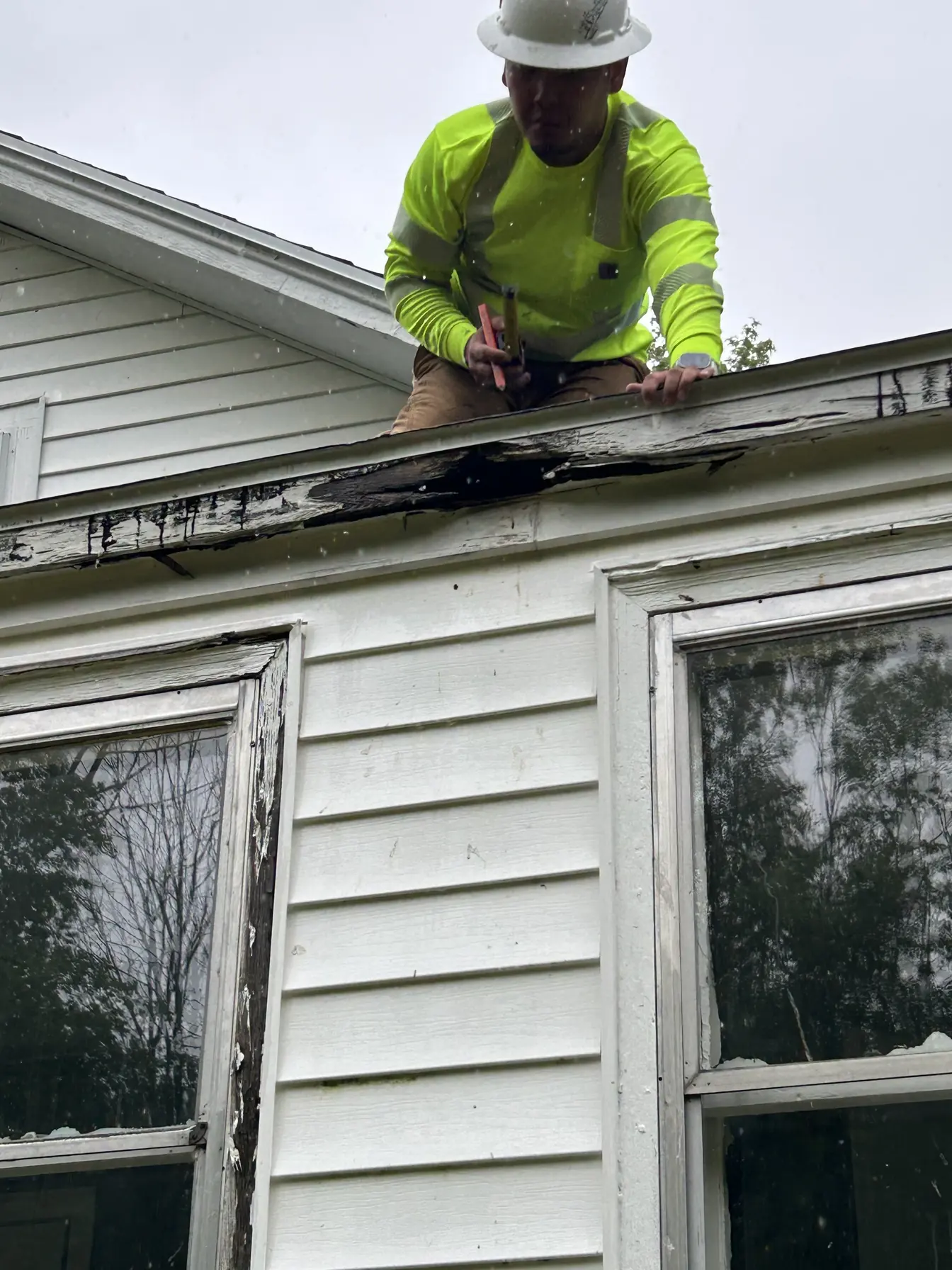
Every year, right as the first cool nights roll into the Upstate, our phone starts ringing about the same thing. People hear a fast scurrying across the ceiling right after sunrise.
That's almost always squirrels in the attic. Here's why fall and winter are peak season, what squirrels can do to a house, and how to get them out without making things worse.
Why squirrels move into attics in fall and winter
Squirrels move into attics in fall and winter because they want a warm, dry place to nest and, often, raise young. An attic is safer and warmer than a leaf nest in a tree.
Gray squirrels commonly have litters in late winter and again in summer. A mother looking for a nesting spot in the colder months is exactly who ends up in your attic.
Why it's such a problem in the Upstate
Upstate South Carolina is full of oaks, hickories and pecans, which means plenty of food and plenty of squirrels. Those same trees often grow right up against houses.
Once the leaves drop, squirrels lose cover in the treetops and start looking for shelter. Branches that touch the roof give them a direct route to any weak spot.
Our winters are mild, so squirrels stay active instead of hunkering down for months. That means more chewing and more damage while they're inside.
How to tell it's squirrels and not something else
Squirrels are active in daylight, so the noise comes early in the morning and again late in the afternoon. Sounds at 2 in the morning point to something else, like raccoons or rodents.
The sound is light and quick, like running or rolling. Some people describe it as something rolling nuts across the floor. Outside, look for chewed holes about the size of a golf ball or bigger near the roofline.
If the sounds you're hearing don't fit that pattern, our guide to scratching noises in walls at night covers the other likely culprits.
Where squirrels get in
Squirrels usually get in at the roofline, where wood meets wood or wood meets shingles. They chew to make a small gap bigger.
- Roof returns, where two rooflines meet
- Gaps between the fascia board and the roof
- Soffit panels that have pulled loose
- Gable vents with thin or damaged screens
- Plumbing vent boots and roof vents
- Chimney gaps and uncapped chimneys
What damage do squirrels cause?
Squirrels chew wood, wiring and insulation, and they do it constantly because their teeth never stop growing. That makes them one of the more destructive animals that can get into a house.
| What gets damaged | What it looks like | Why it matters |
|---|---|---|
| Wiring | Chewed or bare wire coating | Fire risk in a dry attic |
| Insulation | Flattened tunnels and nests | Higher heating and cooling bills |
| Fascia and soffit | Ragged chewed holes | Lets water and more animals in |
| Vents and screens | Torn or pushed out | Open path into the attic |
| Stored items | Shredded boxes and fabric | Nesting material for young |
Our wildlife damage repair service handles all of this, from replacing chewed trim to cleaning out soiled insulation.
How to get squirrels out the right way
The right way is to let the squirrels leave, then close the door behind them. Sealing a hole with a squirrel still inside leads to more chewing or a dead animal in your ceiling.
- Inspect the whole roofline and find every opening.
- Seal all the secondary gaps first, leaving the main entry open.
- Put a one way door over the main entry so squirrels can leave but not return.
- Check for young. In late winter there may be babies that can't leave yet.
- Once the attic is clear, remove the door and seal the last opening.
- Repair chewed wood and replace damaged vents.
- Trim branches back from the roof so it's harder to get up there again.
That last step is a big part of our habitat modification work. Taking away the easy route to your roof is one of the best ways to keep squirrels off it.
What not to do
Don't seal the hole right away, and don't rely on mothballs, lights or radios. Most of those methods annoy squirrels for a few days and then stop working.
Poison is a bad idea too. A squirrel that eats poison often dies inside a wall, and you'll be dealing with the smell for weeks.
What a squirrel entry hole looks like
A squirrel hole is usually round, with chewed and ragged edges. It's often about the size of a golf ball or a bit larger, right at the roofline.
You may see fresh wood shavings on the ground or on top of the gutter below it. Dark staining around the edges comes from oil in the fur as squirrels squeeze in and out.
Look closely at the corners of the roof, where the gutter meets the fascia, and around the top of gable vents. Those are the spots we find chewed most often on Upstate homes.
Watch the roof for a few minutes around sunrise. If you see a squirrel slip into a spot under the eaves, you've found at least one entry.
Fall prevention steps that work
The cheapest fix is the one you do before a squirrel moves in. A quick look each fall can save you a lot of repair work later.
Trim branches that touch the roof. Replace cracked vent covers and loose soffit panels. Put a cap on the chimney if it doesn't have one.
If you've had squirrels before, check the spots that were repaired. Squirrels remember where a nest used to be and will test the same area again.
Our season by season wildlife proofing checklist lists more things to check through the year.
Get ahead of it this season
The best time to deal with squirrels is before they move in. A fall check of the roofline can catch weak spots while they're still small.
If you're already hearing them, call us at 864-364-0580 or request a free inspection. We'll find how they're getting in and close it for good.
Frequently asked questions
- Why do I only hear the squirrels in the morning and evening?
- Squirrels are active during the day. They leave the attic in the morning to find food and come back in the late afternoon, so that's when you hear them moving.
- Will squirrels leave on their own?
- Sometimes they leave for food, but they come back. Once a squirrel has a warm nest in your attic, it has no reason to move out unless you close the way in.
- Can squirrels chew through wires?
- Yes. Squirrels chew constantly, and wire coating is soft enough to gnaw through. Chewed wiring in an attic is a fire risk, so it's worth checking after any squirrel problem.
- Is it safe to seal the hole myself?
- Only after you're sure no squirrels or babies are inside. Sealing them in leads to more damage as they chew to escape, or a dead animal in the attic.
- How do I keep squirrels from coming back?
- Seal every entry point with materials they can't chew through, and trim tree branches back from the roof. Our repairs are warrantied, so if one gets back in through a spot we sealed, we fix it.